Approaching the design of a menu should be a complicated process because it defines the restaurant and the chef. Every other aspect of the restaurant operation will, or at least should, stem from the proper design of the menu and its components. The menu will determine how the dining room will look and feel, how you will advertise and through which mediums, the experience of the line cooks you hire, your training program, which vendors you choose, the equipment you will need, the wine list, price point for menu items, and the expectations for sales and profit. In other words – the menu planning process should not be taken lightly.
There are many restaurants who plan a menu based on what traditionally sells in similar operations, limitations in staffing, a visual theme to the restaurant, or pre-conceived notions of who the customer might be. In this situation it is easy for potential customers to anticipate what the food will be like simply by the look of the building, name on the marquis, or thrust of the concept. “South of the Border, House of Pasta, or Texas Steakhouse” pretty much define themselves in terms of expected menus. There is nothing terribly wrong with this – people do enjoy consistency and often gravitate toward the comfort of knowing what to expect. However, in a very crowded market it behooves a restaurateur to think differently to excite, surprise, exceed expectations, and create “greater than expected” value.
The art and science of operating a restaurant with longevity in mind – a restaurant that stands out and becomes the beacon of what a restaurant can be, will view its operation from the standpoint of the story it tells. To this end, I would encourage operators to ask and answer the following questions and build a menu: one dish at a time.
[] WHAT IS THE STORY YOU WANT TO TELL:
Every restaurant is best served as part of a story. The story can connect with the location and the location’s history, an ethnic cuisine, the restaurateur or chef’s life journey, a commitment to the source of ingredients, or numerous other “stakes in the ground” that are pertinent to the operation. A restaurant without a story will suffer from identity crisis and have a much more difficult time bringing return customers to the table. Once the story is known it must drive most of the decisions made, especially what finds its way onto the menu.
[] HOW DOES EACH INDIVIDUAL DISH’S STORY FIT:
Building the menu list should begin with that larger story. Ask: “How does this dish fit with the big picture?” Each menu item will likely have its own story. Think of the J. Peterman clothing catalog that built the success of clothing sold around an interesting story that accompanied each item. The same should be true of the menu. What is interesting about this dish and how does it drive what it will look, smell, and taste like. The experience of eating each item should be an extension of the story.
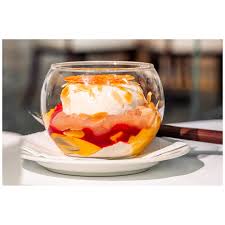
As an example, the age-old dessert – Peche Melba was purportedly invented by Chef Escoffier in honor of the opera singer Nellie Melba when he was the chef at the Savoy Hotel in London. The Savoy celebrated her performance in Covent Garden in London and this simple but spectacular dessert of poached peaches, vanilla ice cream and raspberry puree has lived on ever since as one of the most noteworthy in Escoffier’s repertoire. Now, that story can be used to resonate with cooks who now must prepare it while showing respect for the greatest chef of all time, with the purchaser who must in turn be very selective of the quality and freshness of peaches and raspberries ordered, and with the service staff who now have the tools to convince customers that they can’t leave the restaurant without ordering a dish of such importance.
If your restaurant story stems from respect for timeless dishes that have impacted a chef’s career or the business of food, then Peche Melba is, without a question, a dish that fits that story.
[] HOW DOES EACH MENU ITEM RESONATE WITH YOUR COOKS:
No matter how methodical a chef is in developing menu items, testing recipes, and designing how a dish will fit the story – unless your cooks feel its importance, connect with the story, sense the significance of each step they take in its preparation, and have a relationship with the ingredients and their source, it will be difficult for them to truly replicate what the chef expects. Cooks must feel the importance of the dish and their role in bringing it to life.
[] HOW DO THE FLAVORS MESH:
Chef Grant Achatz of Alinea Restaurant in Chicago refers to this as “flavor bouncing”. When he develops a dish with his cooks, he wants to make sure that each ingredient “connects” well with every other ingredient. The dish should be a symphony that comes together, and the chef is the conductor.
[] WHAT ARE THE POTENTIAL VARIABLES IN PREPARATION:
Whenever a dish is developed, before it lands on the menu, it is important to trouble-shoot. What could go wrong? The chef will need to think about variables in ingredient quality, the impact of business volume and the pace on the line, how cooks might have a slightly different style of work and how their timing might impact on the consistency of a dish. Once potential problems are known then work arounds can be practiced and taught. In the end, it is important to represent each dish the way it was designed and find ways to ensure consistency.
[] HOW CAN THE DISH BE REPLICATED:
A well-designed dish, complete with a well-defined story, may be prepared differently in one restaurant or another based on equipment and/or volume. A dish like Peche Melba in a 20-seat operation might be prepared to order with pre-poached, peeled and cured peaches, raspberry puree made to order, and daily prepared ice cream scooped while the server waits for the dish to be completed. In a 100-seat operation that turns tables more than once on a Saturday night, the ice cream may be pre-scooped in the freezer, raspberry puree prepared in large batches every few days, and assembly completed by the service staff while setting up dessert coffee service. Same dish, totally different approach towards preparation and storytelling.
[] HOW WILL THE DISH PAINT ON THE PLATE:
A picture is worth a thousand words and how a dish is presented will have an impact on how it is perceived, how it sells, and how the story comes to life. It is important to note that presentation adds value and as value rises so can the price. If it creates a positive experience, then customers will be less concerned with price.
[] WHAT IS THE WOW FACTOR:
There is a science to designing a menu that references how placement on the document can impact the popularity of a dish. The first three items will likely sell more than the next seven or eight because people are lazy readers, or they believe that those at the top of the list are better for some reason. What a chef wants is a menu designed so that EVERY dish is superb. To accomplish this, every item needs its WOW factor. It might be in how it is described (wordsmithing is important), how the server promotes it (knowing the story), or how it is presented to the guest once ordered. As annoyed as some chefs and servers may be by guests who take pictures of their food, that is exactly what you should want. When a guest stops what they are doing to look at a dish from various angles, take a few pictures and then posts it to Instagram later, then you know the WOW factor is alive and well.
[] WHAT’S THE BEST VESSEL FOR PRESENTING THE DISH:
I am always surprised when a restaurant invests so much in the design of an operation and spends no time or money on the China, glassware, and flatware used. The plate or bowl is the frame that surrounds a great picture. The right glassware pays homage to the quality of the wine and does impact the aroma and flavor of the beverage. The right weight silverware should match the price point of the food presented. It is part of the package and the accent to the story.
[] WHAT WILL THE DISH PAIR WITH:
Wine and beer lists should align with the food menu and vice versa. They should be planned together.
[] HOW WILL IT BE PRESENTED:
Never underestimate the importance of the service staff in completing the story for a dish and framing the overall story for the restaurant. A bowl of guacamole prepared in the kitchen and presented by the service staff does little to tell the story of such an important side dish in a Mexican restaurant. A cart, wheeled tableside with a stone mortar and pestle, bowl of ripe avocados, fresh limes, and bunches of crisp cilantro; avocados cored a foot away from the guest, mashed with mortar and pestle, a squeeze of fresh lime, a touch of hot sauce and coarse salt, folded with cilantro leaves and scooped in from the guest is a whole different level of storytelling (and price point). Do it right!
[] HOW WILL YOU MEASURE SUCCESS:
The most effective way of determining how well you did with menu planning is clean plates returning from the dining room, smiling guests, returning guests, and those occasional “wow” remarks followed by a flurry of Instagram photos. Do it right and reap the rewards.
PLAN BETTER – TRAIN HARDER
Harvest America Ventures, LLC
Restaurant Consulting
www.harvestamericacues.com BLOG
(Over 900 articles about the business and people of food)
CAFÉ Talks Podcast
https://cafemeetingplace.com/cafe-podcasts
More than 90 interviews with the most influential people in food

 Harvest America CUES BLOG
Leave a comment