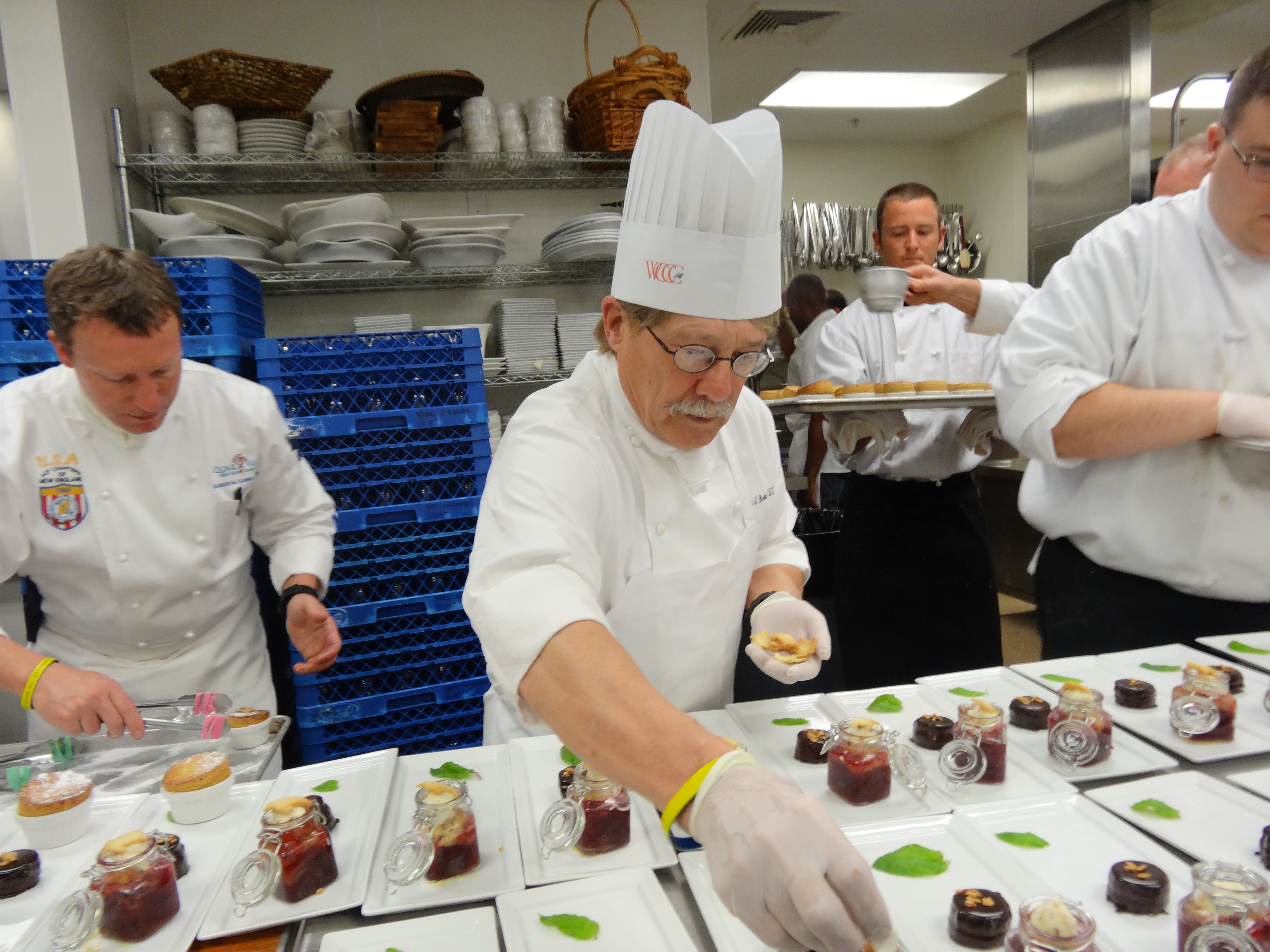
The benchmark song on what was arguably Rod Stewart’s most artistic album proclaimed that “Every Picture Tells a Story” lamenting that there are memories attached to our experiences, mementos, or a work that we invest our time in. It is those memories that gives everything meaning and some level of importance in our lives and to others who surround us. The same is true of chefs and cooks who countless times prepare a menu, a dish; arrange components on a plate, sauce the work, apply an appropriate garnish, wipe the rim and quietly celebrate the story behind it. Knowing those stories inspires the cook and telling those stories allows the diner to connect with a dish on an entirely different level. Connections give a dish special value, added importance, and character that goes beyond flavor and visual appeal.
As examples, any restaurant can, and so many do, offer Caesar Salad as a menu staple. Guest have become accustomed to seeing this familiar item and they have general expectations of how it will be presented and taste. The dish has become a utility without much fanfare or character compared to the stories that surround it. Giving this salad a stage presence through great storytelling can engage a guest and push the item to celebrity status and a calling card for your operation.
Cesare Cardini came to the United States from Italy and settled in San Diego. He ran a restaurant in Tijuana where out of necessity one night, he put together the famous salad with the ingredients on hand. Later his brother, Alex, was responsible for adding the signature anchovy that made the dish pop. Ah, but the story goes further when other restaurants like Delmonico’s and a handful of destination operations from New Orleans to New York City interjected showmanship. When prepared tableside, the well-trained server or maître ’d would crush garlic between sister table forks, rub the interior of the bowl, use finesse to pour the right amount of olive oil, a coddled egg yolk, fresh lemon, salt and cracked pepper, and freshly grated parmigiana cheese. The mixture was whisked until the creamy dressing was complete. Broken leaves of romaine were added along with toasted croutons while being coaxed together until each leaf was lightly coated. The salads were plated in front of the guest while a few delicate fillets of Italian white anchovies were placed on top as the server’s final gift. The dish was elevated to an entirely different level as the guest became the most important person in the dining room during the process. Priceless! The story can make the dish but the dish absent the story is just another salad that can be found in fine dining or your local Greek diner.
The maître d’hôtel, of the Waldorf Astoria in NYC, Oscar Techirky, is surrounded by stories of his sometimes accidental, yet monumental culinary creations including Waldorf Salad with crisp seasonal apples, candied walnuts, peeled celery, fresh mayonnaise, lemon juice, salt and nutmeg – a salad that for decades reigned supreme at formal banquets and on restaurant menus. And, of course, the development of Eggs Benedict can be found in far too many bits of lore taking credit for this centerpiece of brunch and breakfast menus from coast to coast. The important thing to note is that each story, whether entirely true or not, is designed to give a dish a unique part in the play that takes place every day that a restaurant welcomes guests. As is the case with Caesar Salad, the story sells.
The stories abound with dishes that are familiar to most from Escoffier’s invention of Peche Melba in honor of the Australian opera singer – Nellie Melba in 1893 while the chef worked at the Savoy Hotel in London. This luscious dish of fresh poached peaches, vanilla ice cream and a robust red raspberry sauce may just be one of the most famous desserts of all time. Escoffier admired the singer (and maybe had a bit of a crush on her). The infamous Buffalo chicken wing developed at Frank and Teressa’s Anchor Bar in downtown Buffalo with the wings of chickens that had no other use in their kitchen. Who would have guessed that this dish would become a staple at thousands of restaurants from coast-to-coast. The list goes on and on with countless stories about dishes like lobster thermidor, shrimp scampi, Yankee pot roast, or Key Lime pie purportedly invented in the 1800’s by local Florida sponge fishermen but became noteworthy as the favorite dessert of President Dwight Eisenhower.
Every plate produced by a chef may, and probably does, owe some credit to their family, neighborhoods where they grew up, restaurants where they worked, places to where they traveled, and historical influences that grabbed their attention. Chefs tell those stories each time a plate is slide down the pass and presented to a guest. The manner used in telling the story, the enthusiasm behind it, and the way the details are painted on a plate can make or break its popularity – possibly becoming the signature of an operation that defines its reputation.
What are your stories, how are they told, how connected are your guests to those tales that can become part of local folklore? Food for thought.
PLAN BETTER – TRAIN HARDER
“Work Hard and be Kind” – Dick Cattani
Harvest America Ventures, LLC
Restaurant Consulting
www.harvestamericacues.com BLOG
(Over 900 articles about the business and people of food)
CAFÉ Talks Podcast
https://cafemeetingplace.com/cafe-podcasts
More than 90 interviews with the most influential people in food


 Harvest America CUES BLOG
Leave a comment