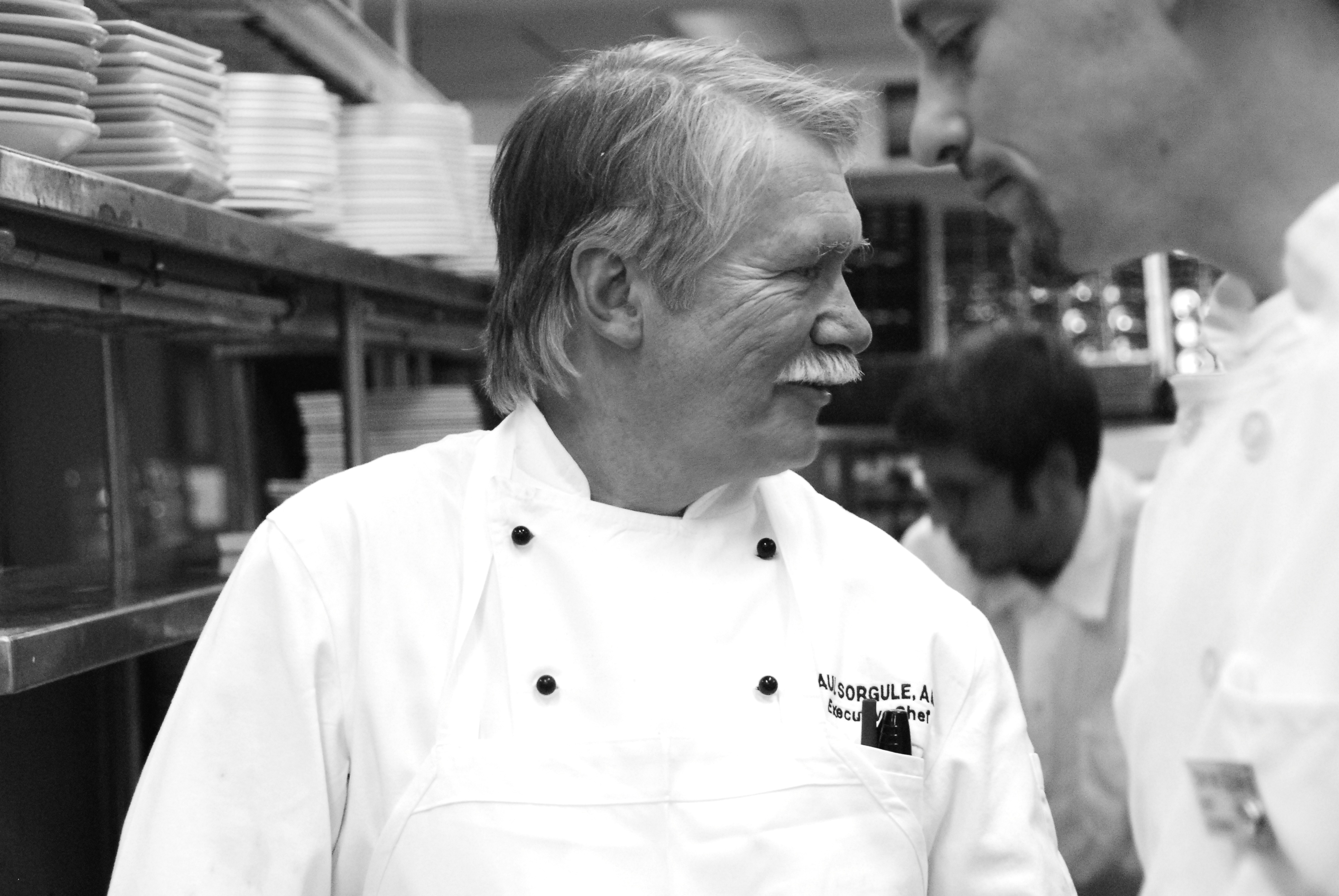
The temptation of convenience can be very strong in a world where success is measured solely in dollars and cents and the labor pool is as challenging as it is today. Don’t misunderstand me – profit is a noble pursuit when it is earned, maybe not so much when it is made. When the bottom line supersedes the desire or the need to “do things right” and value for the guest is difficult to define, then there is something wrong with the formula for success.
Altruism may be naïve and unrealistic in a competitive world, but altruism is what excites many and helps them to justify the investment of time, effort, heart, soul, and passion. It is the heart, soul, and passion that draws people to a career in restaurants and a desire to serve others. It’s just too damn difficult a profession if driving to the bottom line at any cost is the most important motivator.
Convenience is an industry in and of itself. Finding a way to accomplish a goal with less effort, in a shorter amount of time, and at a cheaper cost seems like a no-brainer decision. Why wouldn’t a restaurant move in this direction – to allow someone else to do much of the work for us and rely on them (whoever them might be) to take the on brunt of the workload? It starts with those easy steps that chefs view as non-invasive moves that have little impact on quality but a recognized impact on workload and labor cost. Peeled garlic and shallots by the gallon, pre-made ravioli for that special Northern Italian dish on your menu, full-cooked duck confit, frozen glace de veau or glace de poulet instead of making stocks and watching them reduce for hours, pre-cooked bacon, or ready-to-finish frozen loaves of bread. Think of a time-consuming process and there is likely a “shortcut” convenience product that will take the burden off your shoulders.
Once adopted, there is a taste for what else might be available, where else one can turn to save some labor, find a new way toward consistency, and how might the operation reduce the pain of labor cost. Soon the temptation toward frozen soups and sauces, pre-sliced meats, ready-to-serve desserts, and even liquid concentrated coffee seem to make perfect sense.
The average guest would be surprised at how much convenience has slipped into their favorite restaurant. The question is, would they care? Under the heading of “value”, would a guest feel put off by a restaurant that simply re-heated a soup and up charged for this process rather than make it from scratch using a cook’s unique skill set? Maybe, even more importantly, how would your cooks feel about this process that eliminated some of the need for skills they had invested in building?
What is the end game with a reliance on convenience? Convenience as a business will never find its limit. There will always be some other product or process that cries for the entrance of an easier, more consistent, most cost-effective way of doing things. Like any other business, the creation of an endless eco-system of products and services is a natural progression. Try as they may, something important is lost along the way. So, how important is it to hang on to what might be lost? This is the question of the hour.
Cooking is a craft built on tradition, immersed in personality, aligned with time-tested technique, and created on the shoulders of historical pride. Cooking can also be viewed as a process and as such is open to convenience and circumvented steps. They can be but should not be mutually exclusive. Ignoring convenience products and processes that do not significantly impact the quality of a finished plate of food, nor ignore the importance of the cook, are certainly worthy of consideration. Paying a prep cook $22 an hour to peel garlic or pick parsley may not be the most cost-effective use of their time, skill, or the restaurants checkbook (even though there is a difference in the flavor of said garlic that arrives peeled in gallon jars). But adopting convenience for the sake of convenience and minimizing the skill of a cook or worse yet, eliminating the need for a skilled cook, seems contrary to the ecosystem that has built an industry so important to the communities where we live.
Attracting young people to the profession of cooking has never been more challenging than right now and to try and do so within a vacuum of tradition, skill development, pride in accomplishment, and altruistic objectives will be nearly impossible. For a multitude of reasons, maybe most importantly those that are considered altruistic, we need to balance our decisions that focus on convenience as a solution rather than convenience as a helpful tool.
Value for both the restaurant guest and the career cook depends, to a large degree, on our decisions with product inventory and process implementation. For nearly a generation – bakers were replaced by machine operators in large scale, automated bakery factories. That has taken a 360-degree change in direction as artisan bread baking and craft baked goods are once again an essential component of the restaurant and family table experience. The same will hopefully be true of cooks and cooking.
Food for thought.
PLAN BETTER – TRAIN HARDER
Have you ordered your copy of Paul Sorgule’s latest novel?
A Cook on the Run is available through
iuniverse.com, amazon.com, barnesandnoble.com, or ordered
through your local bookstore.

 Harvest America CUES BLOG
Leave a comment